Four Weeks at Randle Engineering: Applying Vehicle Dynamics in the Real World – Intern Blog
University of Bath Mechanical Engineering student Jonny Masters shares his placement experience at Randle Engineering, applying vehicle dynamics, suspension design and Formula Student engineering knowledge within a leading engineering consultancy.
Introduction
As a Mechanical Engineering student at the University of Bath and member of Team Bath Racing Electric, I was eager to gain experience applying vehicle dynamics and mechanical design skills in industry. During a four-week placement at Randle Engineering, I had the opportunity to work on projects ranging from Formula Student vehicle optimisation to suspension system development.
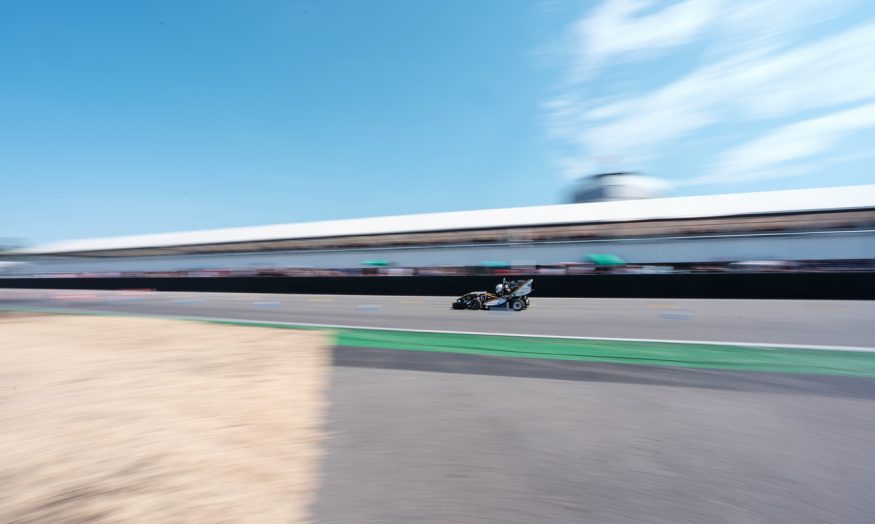
My name is Jonny Masters, and I am currently studying Mechanical Engineering at the University of Bath. Having completed three years of my course plus a placement year I am about to enter my final year, and I was keen to find opportunities to develop my skills in real industry settings. From my time as part of Team Bath Racing Electric (TBRe – the University’s Formula Student team) I had developed a particular interest in vehicle dynamics and mechanical design and as such I was specifically looking for a business that specialised in these core areas. As I researched potential companies one name came up repeatedly: ‘Randle Engineering’. Randle is an engineering consultancy firm founded around vehicle dynamics, but which has subsequently branched out into many areas across aerospace, defence and agriculture. The Randle Engineering team offered me a four-week placement, split either side of my team’s trip to Formula Student Germany (FSG).
First impressions of Randle
I wasn’t quite sure what to expect before my first day at the company. Having worked at a large automotive OEM on my placement I was intrigued to find out what a different scale of company had to offer. On arrival at Randle everyone was very welcoming and I quickly gained an insight into the working environment. What struck me most was the huge variety of work that was undertaken across the office. Randle operates with a methodology of engineering from first principles. The whole team has a deep analytical understanding of the mechanics and physics behind complex systems, allowing them to tackle novel engineering challenges effectively. In combination with this being a open plan office means that there is always strong collaboration across the team. Everyone is very willing to pool knowledge, challenge initial concepts and share ideas. This means there is always stimulating engineering debate taking place, making it a fantastic way to generate ideas and share learning.
Formula Student project
For my first project in the two weeks leading up to Formula Student Germany I was given the opportunity to use Randle’s own vehicle dynamics software RS-Auto. The goal was to analyse TBRe’s car setup, make a list of potential tuning changes before the competition, and highlight key design considerations for developing next year’s car. This project was supervised by Ally McMahon who provided valuable insights on how the metrics output by RS-Auto would translate to the behaviour of the actual car. Ally answered all my questions on the topic, really helping me expand my knowledge in vehicle dynamics.
My analysis highlighted the car’s high ride frequency as the first key finding. Because Formula Student tyres have very low radial stiffness, the suspension rate was over 50% of the tyre rate. Hence, in the simulations, the car would bounce on the tyre more than the suspension. This meant the suspension wasn’t being used to its full effect — for example, resulting in less actuation of the damper to dissipate energy. Secondly, the higher ride frequency means the car’s body is displaced more vertically over uneven terrain, increasing tyre load variation, which is very detrimental to grip at the tyre contact patch.
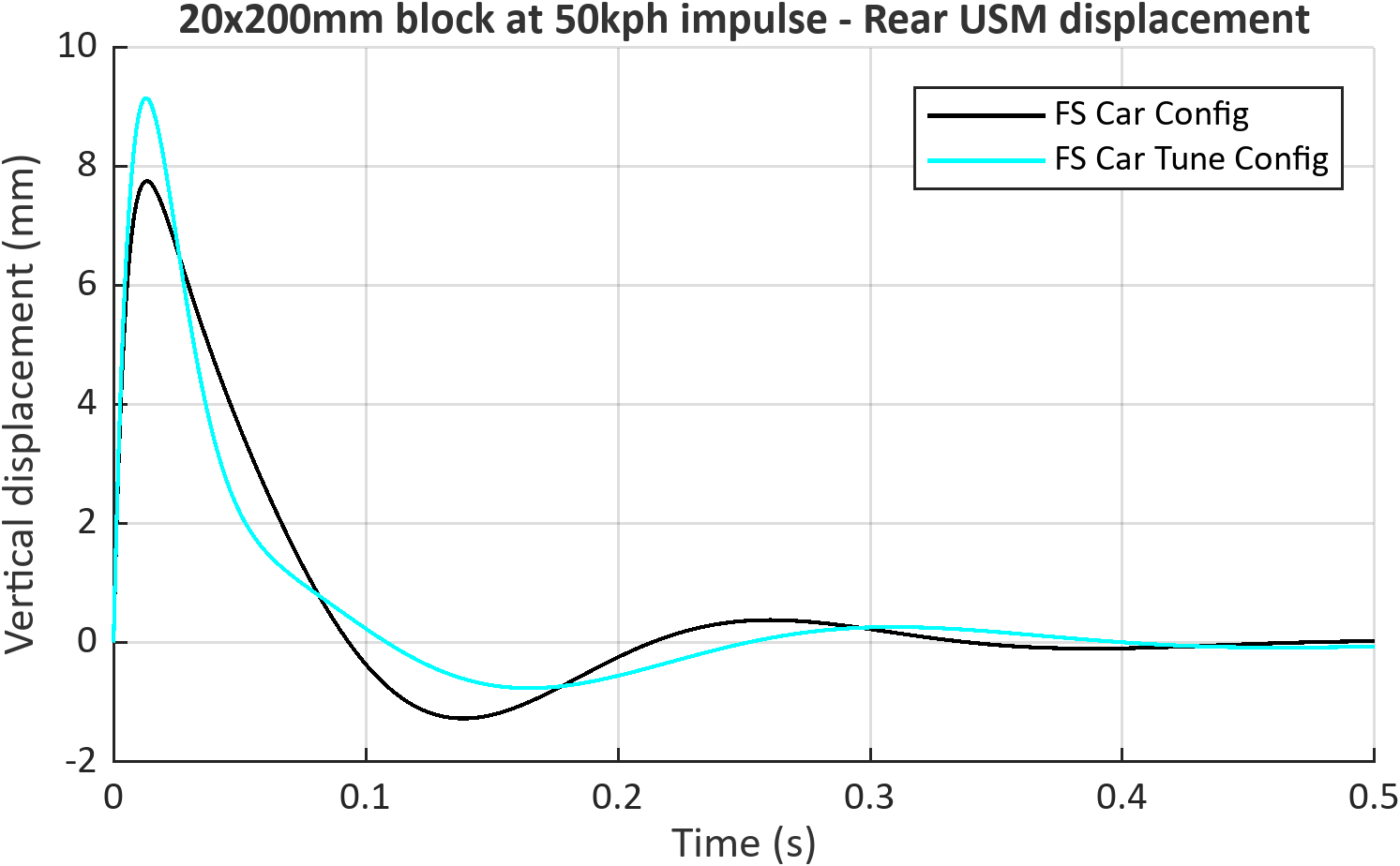
However, decreasing the spring stiffness must be done judiciously with consideration to the aerodynamic load at high speed. I therefore utilised Randle’s spreadsheet for ride height characteristics based on different spring and aero combinations to set the rates of softer springs. Using their lap time simulation tool, I put this alongside other changes to the test, finding a theoretical saving of approximately 2 seconds over a 60-second track representative of the Formula Student Germany autocross circuit.
Suspension project
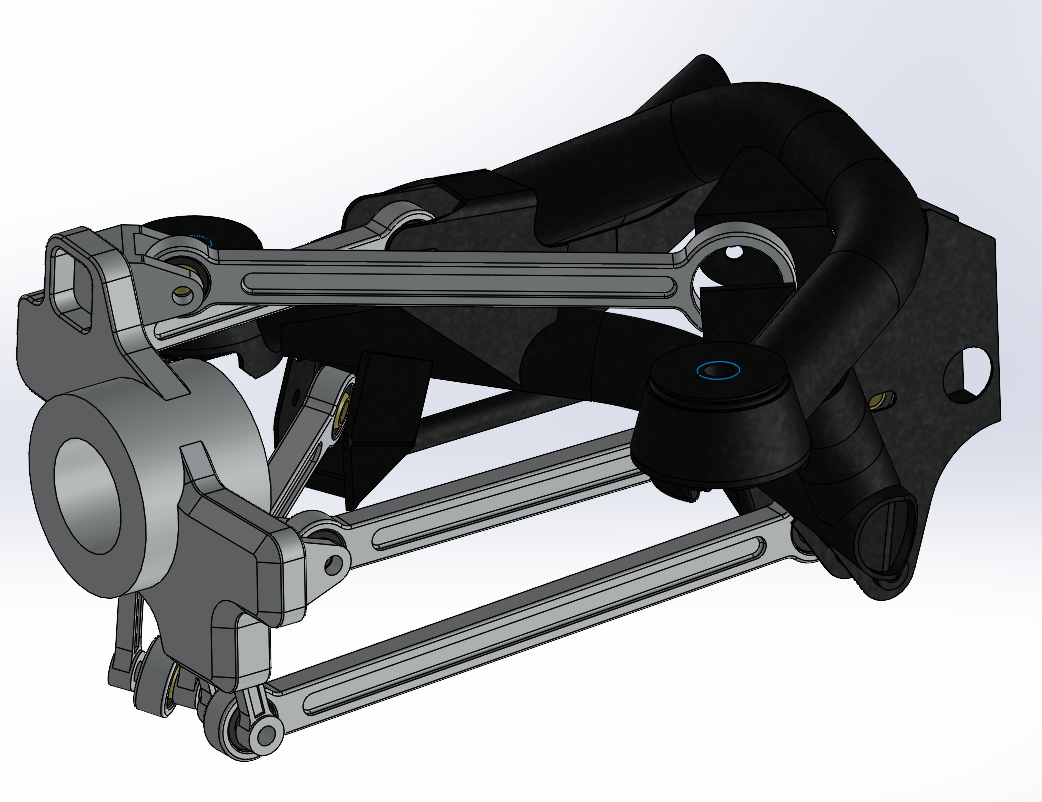
On returning from FSG I then moved onto a new engineering challenge. Working with Maurice Gloster, I started looking at designing a demonstrator model of a five-link suspension system which showcases Randle’s Advanced Compliance Control (ACC) technology. This was a good opportunity to build my modelling skills whilst also working with a new software package in SolidWorks. It was also a chance to combine vehicle dynamics with mechanical design as I learnt about 5 link setups which are not an area that I had encountered before. Working in CAD I was able to build a dynamic model which could be used to calculate hub and contact patch forces for various deflections (exhibiting the compliance control). I created the suspension links and knuckle components before checking for clashes throughout the suspension’s range of motion. The team will 3D print the model for display at future engineering exhibitions.
Reflections
4 weeks at Randle feels like it has flown by! My biggest takeaway must be the variety of projects being worked on by the team. Working at Randle showed me that you don’t necessarily need to commit to a narrow, single sector. Instead, by mastering fundamental physics and engineering principles, you can continuously adapt to solve diverse problems whilst developing as a well-rounded engineer.
My advice to future students would be that it is extremely valuable to seek placement experience. You get a real feel for how the engineering design process works in industry while understanding what aspects of engineering you find the most interesting. During a placement, ask plenty of questions and take every opportunity to learn from experienced engineers. Everyone at Randle loved talking about engineering, and it was a great opportunity to hear interesting opinions and develop practical knowledge.
I would like to give specific thanks to Ally McMahon and Maurice Gloster for supporting me across my two main projects with the team as well as Sarah Hookey and Pete Benzie for giving me the opportunity and helping me maximise the experience!
Of course, thank you to everyone in the team for being so welcoming and supportive throughout, it has been a pleasure!
My placement confirmed the value of combining strong engineering fundamentals with collaboration and innovation, and I am grateful to have experienced this first hand at Randle.
Written by and from the perspective of Jonathan Masters
Photo credit ©Formula Student Germany – media team
Technical images Randle Engineering own
To find out more about Randle Software visit Software – Randle Engineering